
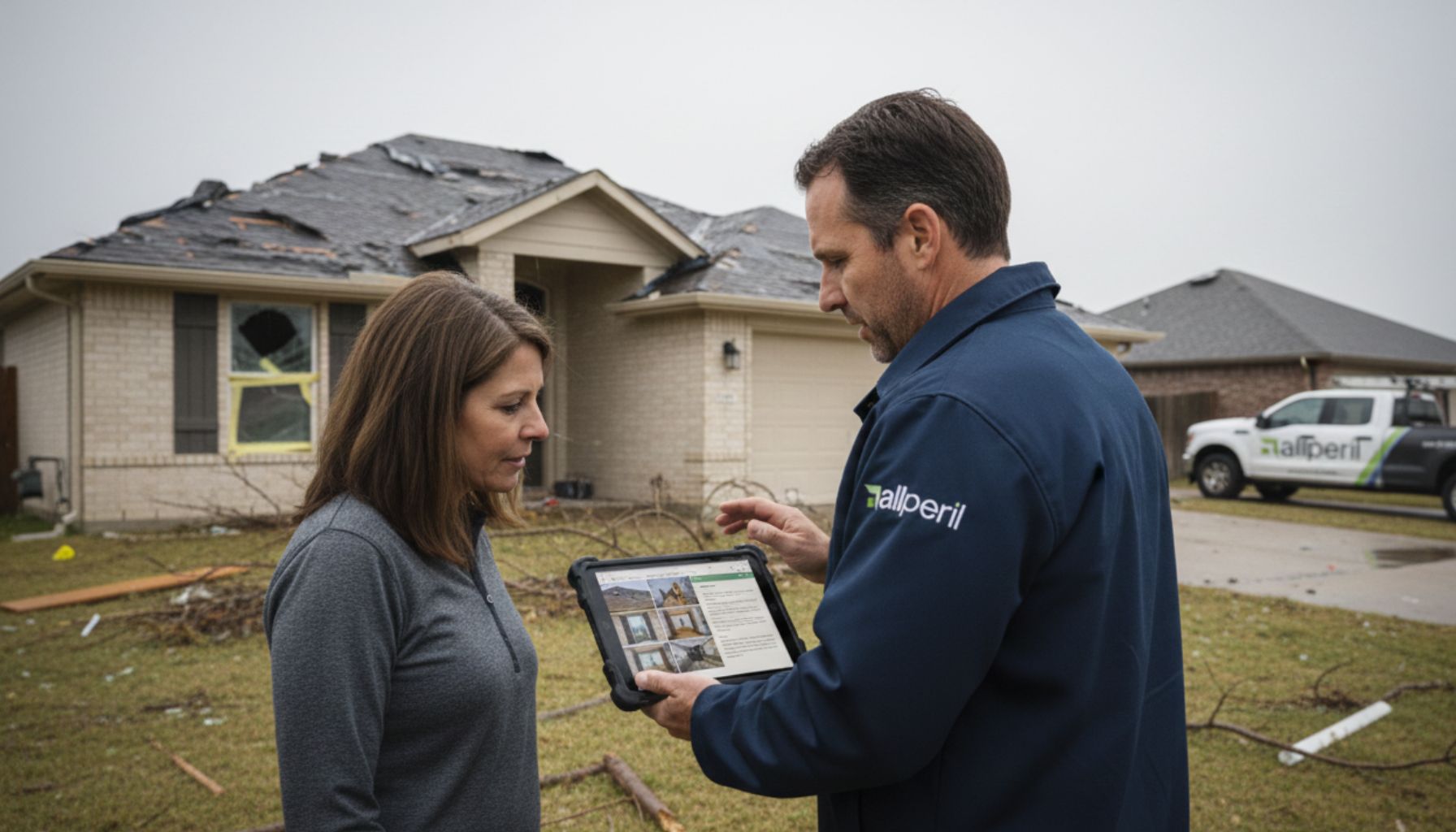
Storm damage can turn life upside down in an instant, and the last thing any homeowner or contractor wants is a claim that drags on for months. In reality, most delays are preventable. They usually come down to missing information, unclear documentation, or breakdowns in communication between the contractor, carrier, and policyholder.
All Peril works every day inside these claim files, and we see the same patterns repeat across states and carriers. The good news is that understanding the root causes makes it much easier to avoid them. Below are the three most common reasons storm damage claims get held up and what can be done to keep things moving.
One of the fastest ways to stall a claim is submitting an estimate or inspection packet without everything the carrier needs. Adjusters rely on evidence, and without it, they cannot approve anything. Missing photos, vague notes, or poorly organized files force the adjuster to stop and request more information, which restarts the review clock.
When a file lands on an adjuster’s desk like this, it becomes an investigation instead of a review. That delay can turn days into weeks.
At All Peril, we structure every claim file with clean folders, labeled photos, and fully supported line items. Every supplement includes code citations, item descriptions, and matching documentation so the adjuster has everything in one place. This reduces back-and-forth questions and speeds up approvals significantly.
A storm claim involves three people at minimum: the contractor, the policyholder, and the insurance adjuster. When communication is inconsistent or slow, everything pauses. Even something as simple as waiting for a homeowner to sign a service agreement or confirm an inspection time can add days to the process.
Unclear expectations make the entire process stressful and inefficient.
We assign a coordinator to every claim. Their job is simple: keep every party informed and make sure nothing falls through the cracks. From inspection scheduling to supplement follow ups, communication stays organized and predictable. This alone can shave weeks off a claim timeline.
An estimate is more than a list of line items. For carriers, it is proof of scope, code compliance, and material requirements. When estimates are missing code items, use the wrong measurements, or list unsupported upgrades, the adjuster has no choice but to question or revise the file.
Almost every supplement dispute comes down to one issue: the reviewer cannot match the scope to the evidence provided.
We build estimates backed by clear reasoning and documented proof. Whether it is a code upgrade, a discontinued shingle, or a missing valley measurement, everything is supported. This reduces objections and allows the adjuster to approve the file confidently.
Every delay in a storm claim has a cause. Most of the time, it is not the storm itself but the paperwork and communication that follow. When the inspection notes, estimates, photos, reports, and updates are clean and organized, the claim moves smoothly.
All Peril’s entire system is built around this idea. We coordinate everything from the first inspection to repair readiness, helping contractors, carriers, and policyholders avoid the common pitfalls that slow claims down.
What is the number one cause of storm claim delays?
Most delays come from incomplete documentation or missing photos.
Does the contractor or the insurance company cause more delays?
It varies. Delays usually result from miscommunication or missing information, not bad intent.
How does All Peril speed up claims?
We organize inspections, estimate writing, supplements, and communication so everything is presented cleanly and ready for review.
Can homeowners help prevent delays?
Yes. Quick responses to inspection scheduling, providing access to the property, and signing necessary documents all help speed things up.
Do supplements always slow down a claim?
They can, but a well-documented supplement with code support typically moves quickly.
.jpg)
.jpg)

